

Unshakeable Confidence Isn't Built on Wins — Just Ask Serena Williams
Gymnasts practice a lot, sometimes equaling twenty hours or more per week before they even reach the Elite or Olympic Level. Yet they only compete 5-10 times a year. So, how do they grow their confidence with so few opportunities to win?
Youth baseball and softball programs have their athletes competing in 60-70 games per summer. If winning games equals high confidence, why do we see more athletes struggling at the plate and on the mound than ever before?
There are two ways people advertise building confidence: outcomes-based and values-based. Outcomes-based confidence is all about the scoreboard–did you win or did you lose?
The more wins you have, the more your confidence grows. This type of confidence wavers because wins aren't guaranteed, and there are often circumstances beyond our control — the other team has a superstar athlete who can’t be stopped, or you're the better team but ran out of pitchers. You see this type of confidence falter when a child who's always been on the best team starts to lose — they have no idea what to do.
Values-based confidence comes from knowing who you are and trusting yourself to do what’s right despite the challenges you may face. You may still lose, but instead of the scoreboard determining whether you won or lost, it’s your ability to respond to the challenges of the situation in line with your values that actually determines if you won. Daily wins–competing as your best self–is what allows minor league baseball players on the team in last place to keep going despite what their record shows.
Serena Williams just came out of retirement from tennis to play in Wimbledon. She tweaked her knee in her singles match, lost, and had to pull out of her much-anticipated doubles return because her knee was still bothering her days later. If confidence increases based on the scoreboard alone, Serena’s just took a nose dive. But if you read her Instagram posts, it shows a different story. She used the words gift, opportunity, grateful, and gave her fans a shoutout for their support. She closed the post by saying, “Stay tuned to a city near you….” This does not sound like a woman who lacks confidence. This sounds like someone who had a setback, knows who she is, and is ready to compete again as soon as her body is physically ready. That’s a values–based win, even though the scoreboard says otherwise.
How can you build this same type of confidence in your athlete? In every situation, your athlete has a choice point. The visual looks like this:
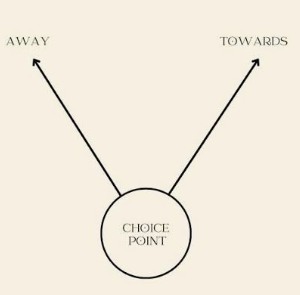
A towards move is an action that moves you toward your best self and your values; an away move moves you away from them. A towards move is a win, even if it's not on the scoreboard. It’s a lot easier to be confident during a challenge and know what to do if you know your values. Quite a few athletes don’t even know their options. Defining their values gives them options in stressful moments.
How can you promote this in your athlete?
Have your athlete pick their values. Not only does this help them clarify who they are and who they want to be, but it gives them autonomy–a component essential for motivation.
Ask about their values on a daily basis. Make it a part of the conversation.
Reflect on when they made a conscious choice (a towards move) to move in the direction of their values
Here is a list of values that I use with my clients:
focused | determined | thoughtful | joyful | leader | learner | consistent | encouraging | respectful | grateful | collaborative | prepared | free | passionate | courageous | growth minded | curious | disciplined | empathetic | meticulous | resilient | coachable | connected | fun | fair | competitive | kind | present | flexible | accountable | honest | patient | brave
Here is a list of reflection questions:
Tell me when you were _______________when something challenging occurred.
How did your value of________ help you make better choices?
Did you notice when you started making away moves? What value could have helped you make a different choice in that situation?
The gymnast who only competes five times a year isn’t short on confidence. She’s just not measuring it by the scoreboard. Neither is Serena. Your athlete doesn’t have to either. With values-based confidence, your athlete’s confidence grows because they’re intentional about who they are in moments of challenge. When kids know who they are despite their sport, they build confidence based on a different kind of wins and losses. And they’re actually in control of who they are and who they want to become. They finally trust themselves to do what’s important–the most unshakeable kind of confidence.
Until next time — one good enough move at a time, so you can stay in the game.
Kim
